People Who Care About Different Issues Often Take Different Types of Actions
What Will Your Audience Do for Your Cause?
When people think about advocacy, they usually picture people protesting or voting on an issue they care about. But for supporters of LGBTQ+ rights, the most common form of engagement happens somewhere more ordinary: at the checkout counter.
In our SPIRE audience engagement research, nearly 19 million Americans say LGBTQ+ rights is one of their top issues. And the top way they show their support isn’t donating or volunteering—it’s boycotting. Forty-one percent have refused to buy from a company because of the issue, the highest-ranked action in our data for this audience. Almost a third have gone further, deliberately purchasing from companies whose values align with their own.
Data like this builds on work done for decades to change hearts and minds about LGBTQ+ issues. When only 27 percent of Americans supported marriage equality in the 1990s, our research helped advocates reframe the conversation—moving from legal arguments toward a shared aspiration for a lifetime of love and commitment. That narrative shift helped millions of people change their minds, and today nearly seven in 10 Americans support marriage equality.
Attitude change is where impact often begins, but meaningful action is where it takes hold. Audience insight helps organizations move people to act. SPIRE provides data on the aspirations, values, and interests of millions of Americans to understand who cares about an issue, how they want to be engaged by organizations, and what they’ll do to make a difference.
The data below show why it’s important to understand how different people want to engage on different issues. LGBTQ+ rights supporters are more likely to boycott, share information, and vote. In contrast, people who support access to food are more interested in donating money and volunteering.
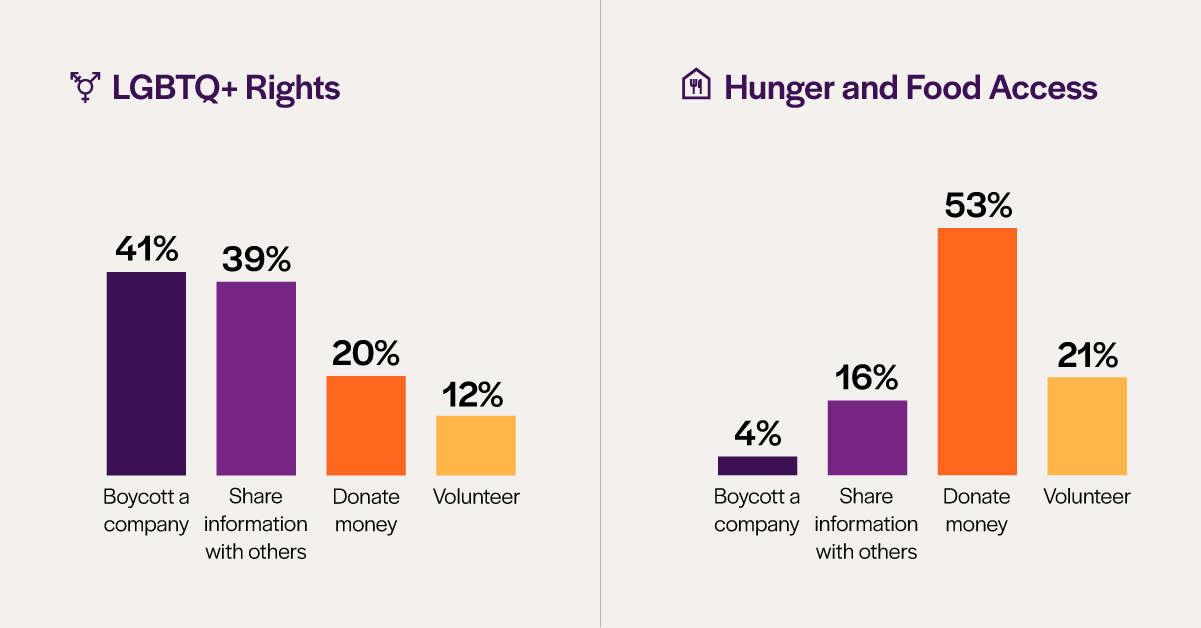
These supporters are expressing their values every day—through purchasing decisions, sharing of information with friends and family, and the media and culture they seek out. Thirty-nine percent share information and ideas with others. More than a third vote on the issue, and just as many encourage others to do the same. They’re also deeply immersed in arts and entertainment—more so than most other issue supporters.
Understanding what people believe is essential. Understanding what they’re ready to do is what turns belief into impact.