Change the Narrative.
Shift What’s Possible.
SHIFT is a strategic approach to narrative change that leads to meaningful impact.
Do you need to change the narrative about your issue?
SHIFT is a practical system for narrative change, grounded in rigorous research, insights from communications science, and hands-on experience using the power of narrative to achieve ambitious goals.
The approach outlined here helped the Freedom to Marry campaign build majority support for marriage equality—to shift a losing issue into the law of the land. It helped UnidosUS drive a new narrative about immigrants in Arizona. It’s also helping Lumina Foundation change how Americans think about the power and promise of higher education.
You don’t have to wait for times to change to achieve impact on your issues. Narrative change can start small, within an organization or a field—and it can go big, through integrated campaigns that drive far-reaching impact.
What do we mean by narrative?
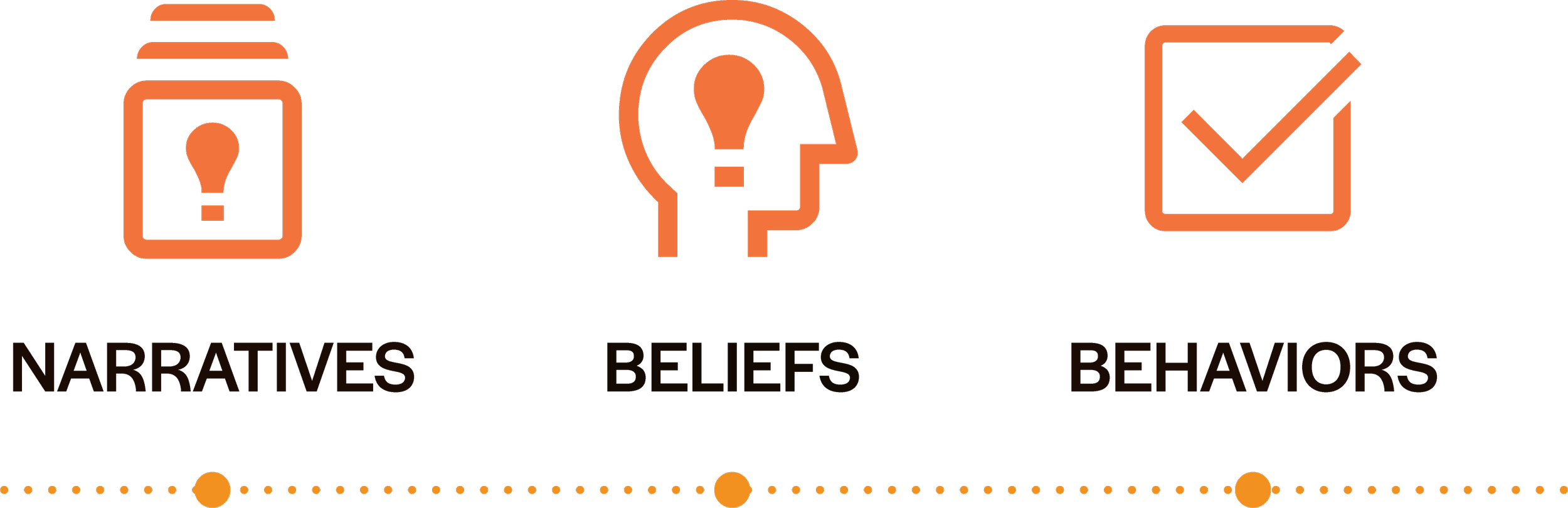
Narratives are ideas about people and the world that are common in our culture, shape our beliefs, and drive our behaviors. In the fields of social science and social change, these ideas are called meta-narratives. They are lessons we take away from experiences we have and stories we hear in our personal lives, popular media, and political discourse.
Example: Othering
Othering is the idea that the world is divided into “in” groups and “out” groups—“us” and “them.” Ideas like these are not always explicit, but they shape the way people perceive and treat each other.
Meta-Narrative
“There are people like us, and there are people like them.”

Beliefs
“They don’t share our values.”
“They can’t be trusted.”
“They are taking something from us.”

Behaviors
Avoiding people in the
“other” group.
Blaming the “other” group
for problems.
Denying the “other” group equal rights.

Frame
your issue strategically
to create change
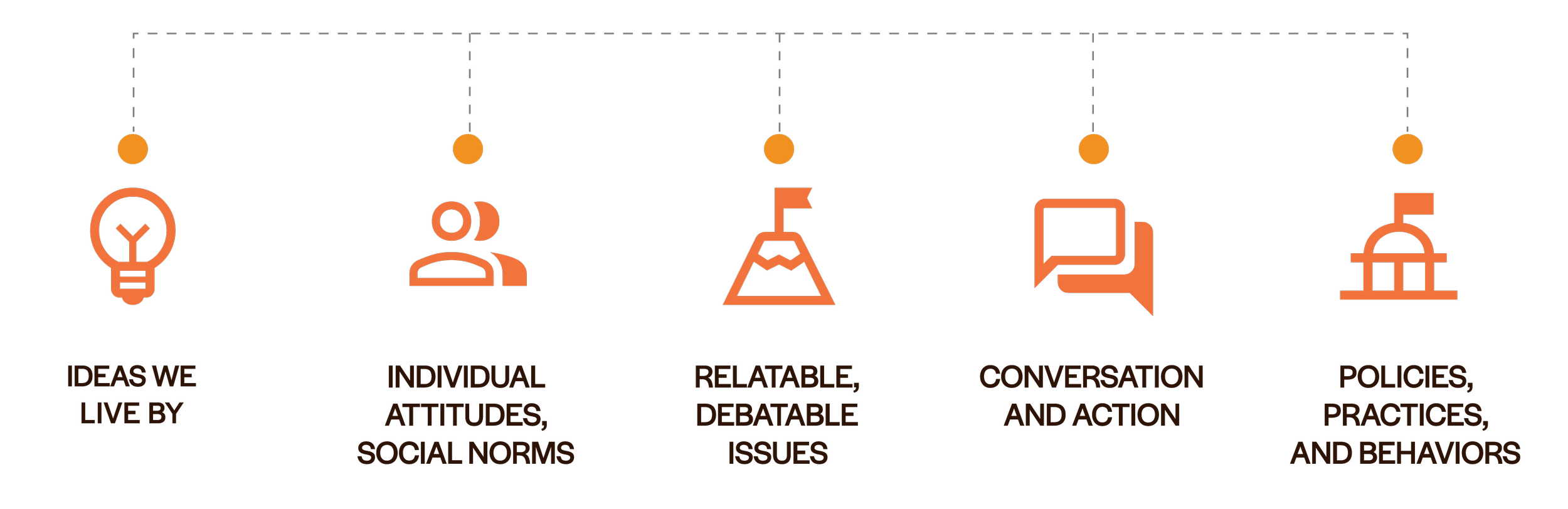
Meta-narratives become “ideas we live by.” They shape the way we see ourselves and the world. They help us make sense of events and experiences. They guide our understanding about how things are, how things should be, and what’s possible for us to achieve.
When you know what meta-narratives influence people’s beliefs about your issue, you can frame it strategically to shift attitudes and achieve your goals.
Below are a few examples of common meta-narratives. They’re shown as pairs, but they aren’t always “either/or” propositions—people can hold ideas that seem contradictory.
Making a Difference
What I do makes a difference.
I can’t do much to make a difference.
Hard Work
If you’re willing to work hard, you
can get ahead.It takes more than hard work
to get ahead—you need
opportunities and tools.
Competition
Life is a competition—you have
to fight to get what’s yours.People succeed through
cooperation—we have to
work together.
Social Responsibility
We are only responsible
for ourselves.We have responsibilities
to each other.
How do we drive narrative change?
To achieve meaningful, measurable impact through narrative change: Use narrative research to understand the ideas that influence individual attitudes and social norms around your topic—it’s best not to make assumptions. Drive strategic narratives by engaging target audiences around relatable, debatable issues people care about. Design activities to deliver positive narratives and drive meaningful conversation and action. This is what leads to lasting attitude change and helps to change public policies, business practices, private behaviors, and more.